
The B2B landscape has fundamentally transformed. I learned this when my team spent $15,000 on what looked like a premium list, only to find just 340 out of 5,000 contacts actually held decision-making roles.
What’s changed:
- Shift from broad Technology Users Mailing Lists to intent-driven, role-specific data
- AI and LLMs have raised the bar for data quality
- Prospects are more selective about who gets their attention
- Context and timing matter more than volume
In 2026, the right list isn’t just email addresses, it’s intelligence about who to reach, when, and why.
What Is a Technology Decision Makers List?
A curated database of individuals with authority, budget, and influence to purchase technology solutions.
Key roles included:
- CIOs, CTOs, CISOs
- IT Directors and VPs of Engineering
- Heads of Digital Transformation
- Chief Data Officers and AI Leaders
Critical difference: Modern lists provide decision-maker intelligence, not just contact data like traditional Technology Users Mailing Lists.
Traditional mailing lists give you name, title, email, and phone. Modern decision-maker databases provide verified roles with budget authority, current technology stack, recent behavior signals, buying committee structure, and timing indicators.
How AI and LLMs Are Reshaping Data Quality
LLMs now analyze millions of data points across:
- News articles and press releases
- Company websites and social media
- Job postings and conference lists
- Patent filings and publications
Three key improvements:
Data enrichment: LLMs connect the dots, seeing that a Director recently published on cloud migration, their company got funded, and they’re hiring engineers, means they’re in buying mode.
Title normalization: Understanding that “CISO” and “VP of Information Security” are similar roles but carry different authority at different company sizes.
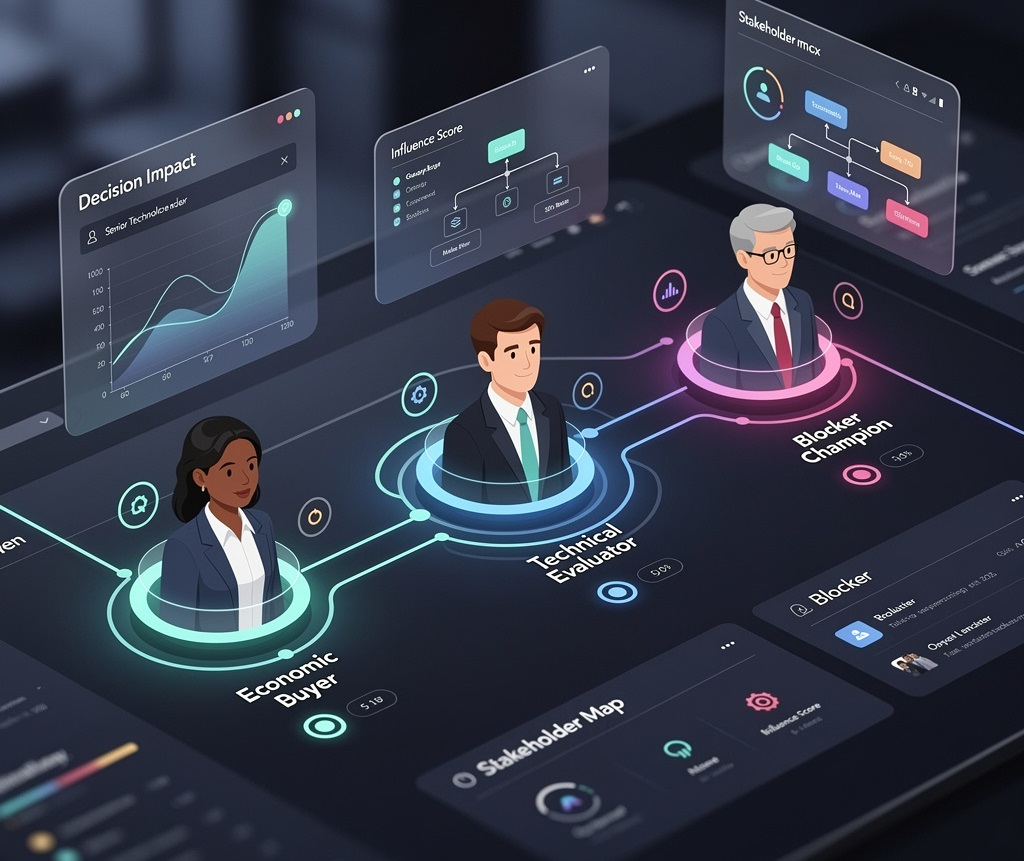
Buying-committee mapping: Identifying the economic buyer, technical evaluator, champion, and blockers, not just one contact.
Key Criteria for Reliable Decision-Maker Data
Data Accuracy and Verification
What you need:
- 95%+ email deliverability rates
- Human + AI verification process
- Real-time validation at purchase
- Monthly or continuous updates
Top providers achieve 93-97% accuracy with clear replacement policies. Anyone claiming 100% accuracy is lying.
Role & Seniority Precision
Not all CIOs are equal. A Fortune 500 CIO manages hundreds of millions; a 200-person company CIO might have a $2M budget.
Reliable providers:
- Use AI-powered title normalization for role context
- Filter true decision-makers vs. influencers
- Include budget ownership indicators
Real example: We segmented IT Directors by budget authority. Tier 1 (direct authority over $500K) converted at 8X the rate of others.
Firmographic & Technographic Depth
Basic firmographics (table stakes):
- Company size, industry, revenue, geography
Technographics (competitive advantage):
- Current technology stack
- Replacement opportunities (competing solutions)
- Integration opportunities (complementary tech)
- Infrastructure compatibility
LLM advantage: Traditional lists say “Uses AWS.” Advanced databases reveal “Migrated to AWS 18 months ago, uses EC2/S3/Lambda, hiring AWS engineers, evaluating containers.”
Intent Data: A 2026 Must-Have
Intent data captures behavioral signals showing active research or buying preparation.
Key signals:
- Consuming content on specific topics
- Searching for solution comparisons
- Attending webinars and events
- Visiting competitor websites
- Downloading buyer’s guides
Three types:
- First-party: Your own website and content engagement
- Second-party: Partnership data from publications
- Third-party: Aggregated signals across thousands of websites
Best strategies combine all three.
Compliance and Data Ethics
Why compliant data performs better:
- Improved deliverability (better sender reputation)
- Higher AI trust scores (positive engagement signals)
- Better sales effectiveness (higher-intent prospects)
Questions to ask providers:
- What’s your legal basis for processing data?
- How do you handle data subject rights requests?
- What’s your suppression list management process?
- Do you provide audit documentation?
Red Flags to Avoid
1. “100% Accurate Data” Claims – Impossible. Top providers hit 93-97%.
2. No Transparency on Sources – “Proprietary sources” isn’t an answer.
3. Outdated Title Taxonomies – Missing roles like Chief AI Officer, Head of ML, and DevOps Lead.
4. No CRM Integration – Data in CSV files won’t be used effectively.
5. Suspiciously Low Pricing – Quality data costs $2-8+ per contact, not $0.10.
How to Evaluate Providers
Ask these questions:
- Which AI models do you use for enrichment?
- What’s your data refresh frequency?
- What percentage is human-verified vs. machine-verified?
- What’s your bounce rate guarantee?
Test before buying:
- Request 50-100 sample contacts
- Cross-reference against LinkedIn
- Run emails through verification tools
- Have sales call 10-15 numbers
- Measure bounce rates, connect rates, and accuracy
Using Decision-Maker Data with AI Tools
AI-personalized outreach gets 8-15% response rates vs. 0.5% for generic emails.
Your process:
- Feed LLM: prospect profile, your value prop, and specific context
- LLM generates messages referencing their challenges, tech environment, recent news, and case studies
Integrate with:
- AI email tools (Lavender, Copy.ai)
- Conversational AI chatbots
- Predictive ABM platforms (6sense, Demandbase)
Context-rich data improves AI output quality dramatically.
Final Checklist for Your Technology Decision Makers List
Accuracy and Verification
- 93%+ accuracy guarantee
- Human + AI verification
- Real-time email validation
- Monthly updates minimum
LLM-Enhanced Enrichment
- AI-powered title normalization
- Buying committee mapping
- Behavioral signal analysis
Intent and Technographic Signals
- Current tech stack data
- Active research behavior indicators
- Firmographic filters
- Buying stage segmentation
Compliance and Transparency
- GDPR/CCPA compliance
- Clear data sources
- Consent management
- Audit documentation
Integration Capabilities
- Native CRM integration
- Marketing automation compatibility
- API access
- Real-time enrichment
Conclusion
In 2026, the companies winning big aren’t the ones with the biggest databases; they’re the ones with the sharpest focus. We’ve all felt the frustration of sending hundreds of emails into the void, hoping something sticks. That era is over. Today, success comes from knowing exactly who to reach, when they are ready to listen, and why they should care.
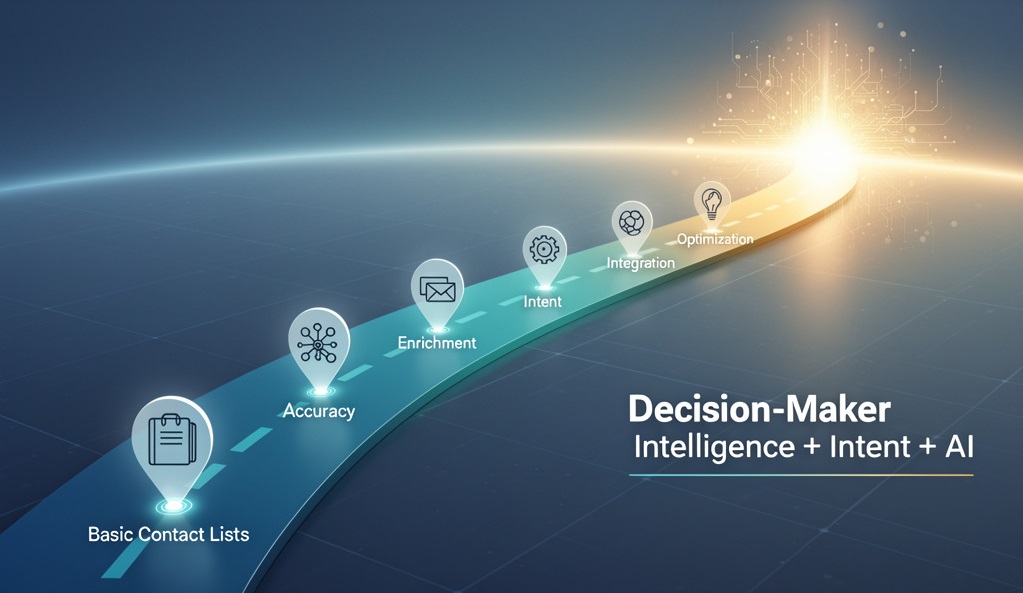
Your roadmap:
- Start with quality over quantity
- Choose decision-maker intelligence over basic contact lists
- Add intent and technographic intelligence
- Integrate with AI-powered tools
- Create feedback loops for continuous improvement
The future of B2B isn’t about reaching more people with Technology Users Mailing Lists. It’s about reaching the right people with a quality Technology Decision Makers List, at the right time, with the right message.
Verified accuracy (93%+), AI-powered role precision, technographic and intent data, compliance with regulations, and continuous updates distinguish quality Technology Decision Makers Lists from basic contact databases.
They normalize titles, map buying committees, predict intent by recognizing patterns, and continuously validate information in real-time.
Top providers refresh continuously or monthly. Quarterly is minimally acceptable. Annual is worthless 30% of contacts change roles yearly.
$2-8 per contact for basic verified data, $8-15 for enriched data with technographics, $20-50+ for comprehensive intelligence with real-time intent.